
Need Answers to Past Papers?
Get accurate answers for KCPE, KCSE, CDACC, KPSEA, KNEC, Edexcel, and more exams. Contact us now for quick help!
Contact Us on WhatsAppPAY ATTENTION: JOIN US ON WHATSAPP TO ACCESS RECENT PASTPAPERS & NOTES
After completing your welding certification from CDACC, KNEC, or other institutions, you’re probably wondering where to start your job search in Kenya’s competitive market. This comprehensive guide reveals the most promising sectors, companies, and platforms where welders are actively recruited, plus insider tips on securing employment or starting your own welding business.
Welding is one of the most marketable technical skills in Kenya today. With construction, transport, manufacturing, and infrastructure sectors growing steadily, certified welders are in constant demand. But after completing a course, many graduates ask: Where can I find welding jobs in Kenya? This guide will help you discover the top places, platforms, and industries hiring welders, whether you want formal employment or self-employment.
Why Welding Is a Smart Career Choice
Welding plays a key role in nearly every construction or metalwork-related activity in Kenya. Welders fix structures, build metal frames, repair machines, and install gates and pipes. Whether you studied at a TVET, a polytechnic, or through NITA certification, your welding skills can lead to good-paying, long-term job opportunities.
Benefits of pursuing welding jobs in Kenya:
High demand in multiple industries
Potential for self-employment
Low startup costs for personal businesses
Opportunities to work locally or abroad
Where to Find Welding Jobs in Kenya
1. Construction Companies
Construction firms are some of the biggest employers of welders. Projects include:
Residential and commercial buildings
Bridges and flyovers
Gates, staircases, and railings
Roofing and structural beams
How to get hired:
Visit construction sites with your certificate
Network with foremen or site managers
Apply to companies like Epco Builders, Cementers Ltd, and Seyani Bros
2. Manufacturing and Fabrication Companies
Metal fabrication and manufacturing firms need skilled welders for:
Machine parts assembly
Metal product manufacturing
Repair and maintenance
Companies hiring welders include:
Numerical Machining Complex (Nairobi)
Steel Structures Ltd
Devki Group
Tononoka Group
Bidco Africa (for plant maintenance roles)
3. Automotive and Transport Sector
Welders are in demand in:
Vehicle body-building workshops
Garages and auto repair shops
Matatu modification yards
Where to look:
Industrial areas in Nairobi, Mombasa, Kisumu, Eldoret
Auto parts suppliers or custom shops
Vehicle assembly companies like Isuzu East Africa
4. Government Institutions and Parastatals
Some government agencies and county governments hire welders for maintenance and infrastructure work.
Look for jobs in:
Kenya Railways
Kenya Ports Authority
Kenya Power
Kenya Urban Roads Authority (KURA)
County public works departments
Tip: Monitor official county websites and the Public Service Commission portal for openings.
5. NGOs and Youth Employment Programs
Some NGOs and non-profits offer job placements or business tools to skilled youth.
Check organizations like:
Kenya Youth Employment Opportunities Project (KYEOP)
Ajira Digital (for online/offline gigs)
Uwezo Fund and Youth Enterprise Fund (for startup capital)
6. Job Websites and Online Platforms
Several Kenyan job boards regularly post welding vacancies:
Top platforms include:
BrighterMonday
Fuzu
MyJobsInKenya
Corporate Staffing Services
County job portals
Facebook job groups (e.g., “Jobs in Kenya for Welders”)
Tip: Create a professional CV and upload it on these platforms with your welding certificate attached.
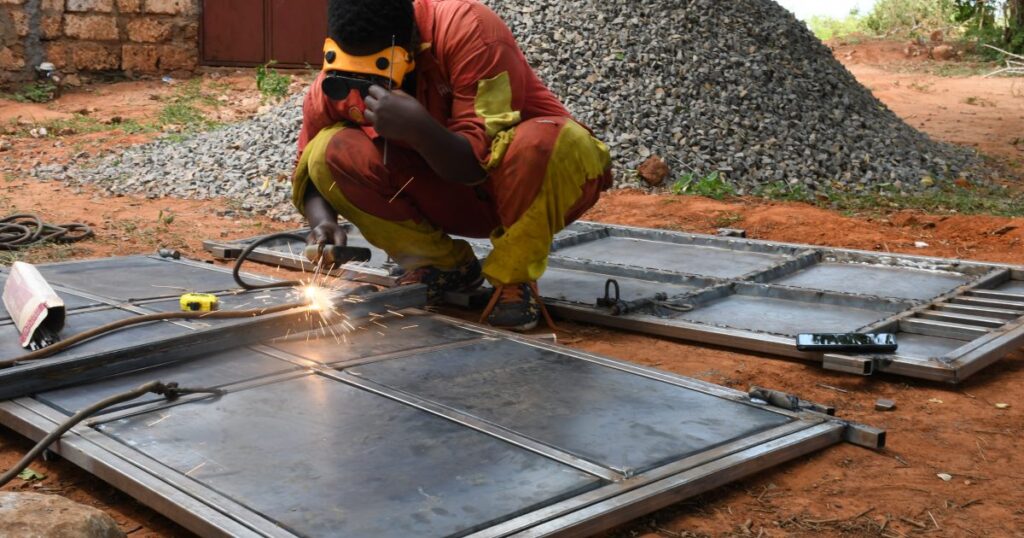
7. Self-Employment and Small Welding Businesses
If you prefer to be your own boss, welding offers great opportunities for entrepreneurship.
Start a small business doing:
Gate and grill fabrication
Furniture welding (beds, chairs, shelves)
Mobile welding services
Construction subcontracts
What you need to start:
A welding machine (costs around Ksh 10,000–40,000)
Basic safety gear (gloves, apron, helmet)
Business license from your county government
Word-of-mouth marketing or social media presence
8. TVET College Career Offices and Alumni Networks
Many TVET institutions support students after graduation. Ask your college about:
Job placement programs
Internship-to-employment partnerships
Employer visits and recruitment days
Referrals through alumni associations
Colleges like Kabete National Polytechnic, Rift Valley Institute of Science and Technology, and Kenya Coast Polytechnic often connect graduates with companies.
Tips to Increase Your Chances of Getting Hired
Build a solid portfolio – Take photos of your work and show them to employers
Network often – Attend trade shows, seminars, or community forums
Improve your skills – Learn MIG, TIG, or pipe welding to stand out
Get licensed – Ensure your training is recognized by KNEC, NITA, or CDACC
Show up early – Many jobs are found by visiting sites directly
Estimated Salaries for Welders in Kenya
Entry-level welders: Ksh 15,000 – 25,000/month
Experienced welders: Ksh 30,000 – 60,000/month
Self-employed welders: Can earn Ksh 50,000+ depending on jobs
Specialised welders (e.g., underwater or industrial): Ksh 70,000+
Conclusion
After completing your training, finding welding jobs in Kenya is a realistic and rewarding step. Opportunities are everywhere – from construction sites to car garages and government projects. Whether you choose employment or start your own business, welding offers stable income, independence, and a valuable trade skill.
Action Tip: Print copies of your CV and certificate, visit local construction sites or workshops, and introduce yourself. Your first welding job might be just one handshake away.
Frequently Asked Questions
Can't find what you're looking for? Contact us

Thank you